Showing posts with label Structure View. Show all posts

Wednesday, 11 May 2016

Aswan High Dam

Aswan is located in southern Egypt worth a visit during stay in Luxor. The city is located on the east bank of the Nile at the first cataract and is therefore tourist destination and an important center of local tourism.


Near the city is the ancient red granite stone quarry, where found fragments of sculptures and the biggest unfinished obelisk. On the Nile near the town built High Aswan Dam. Below that is closer to the city, is located, built in the early twentieth century Aswan Low Dam, older and lower.

High Aswan Dam has a length of 3600 m, a width at the base of 980 m and 40 m at the top and the height of 111 m. For its built have been used 43 million cubic meters of material. The maximum capacity of dam is 11 000 m³ / s.

In 1946 the Aswan Low Dam proved to be insufficient. It was then decided to build larger dam, 6 km up the Nile. Plans to build the High Dam began in 1952, after taking over the government by Gamal Abdel Nasser. Financial support given to Egypt Soviet Union, proposing to cover about one-third of the construction costs. The USSR also offered help Soviet engineers and machine. The construction of dam started in 1960 and was completed July 21, 1970.


The construction of Lake Nasser threatened to flood many monuments of ancient Egypt. As a result of the protests of archaeologists, UNESCO launched in 1960 an operation to rescue these monuments. 24 or more objects have been moved to higher places as in the case of Abu Simbel or given to countries that participated in this operation.

Construction of dam has had many benefits. Hydroelectric power plant began operating in 1967, and its yield was then about half of the total production of electricity in Egypt. For the first time it made it possible to provide electricity to many Egyptian villages. The dam allows to adjust the water level of the Nile. Allowed to reduce the effects of floods and droughts. In addition, it enabled the development of fisheries within the Lake Nasser.

Lake Nasser is called a decade reservoir. Calculations indicate that in the absence of rainfall in the whole of Africa for 10 consecutive years, the amount of water in the tank is sufficient to water the entire population of Egypt for a decade. Lake Nasser is a reservoir self-cleaning. Current research indicates a zero-rate quality water, which means water directly drinkable.

The area west end of dam, there is a tower in the shape of a lotus flower. It was built as a monument to the Soviet-Egyptian friendship, to commemorate the help The USSR on the construction of the High Dam. On the Nile near Aswan, there are two large islands - Elephantine and Kitchener's Island. On Elephantine is located, Nubian village, and Kitchener's Island as a whole botanical garden.


For most of antiquity, Aswan was a very important city of ancient Egypt. In 331 BC he was in the country of Alexander the Great, and after its collapse, in the State of Ptolemies. Emperor Augustus joined Egypt and Aswan to the Roman Empire. In the year 640 the town became part of the Caliphate of Baghdad, and since 800 years in subordinate State Aglabidów. Sultan Selim I joined in 1517 Aswan and Egypt to the Ottoman Empire. It was not until 1805 Aswan found himself in the independent Egypt governed by Muhammad Ali. In 1882 there was the intervention of the British in Egypt. Since then, Aswan has become one of the most important towns occupied by the British. Since 1922, Egypt is independence, and Aswan is still one of the most important city.



Saturday, 16 April 2016

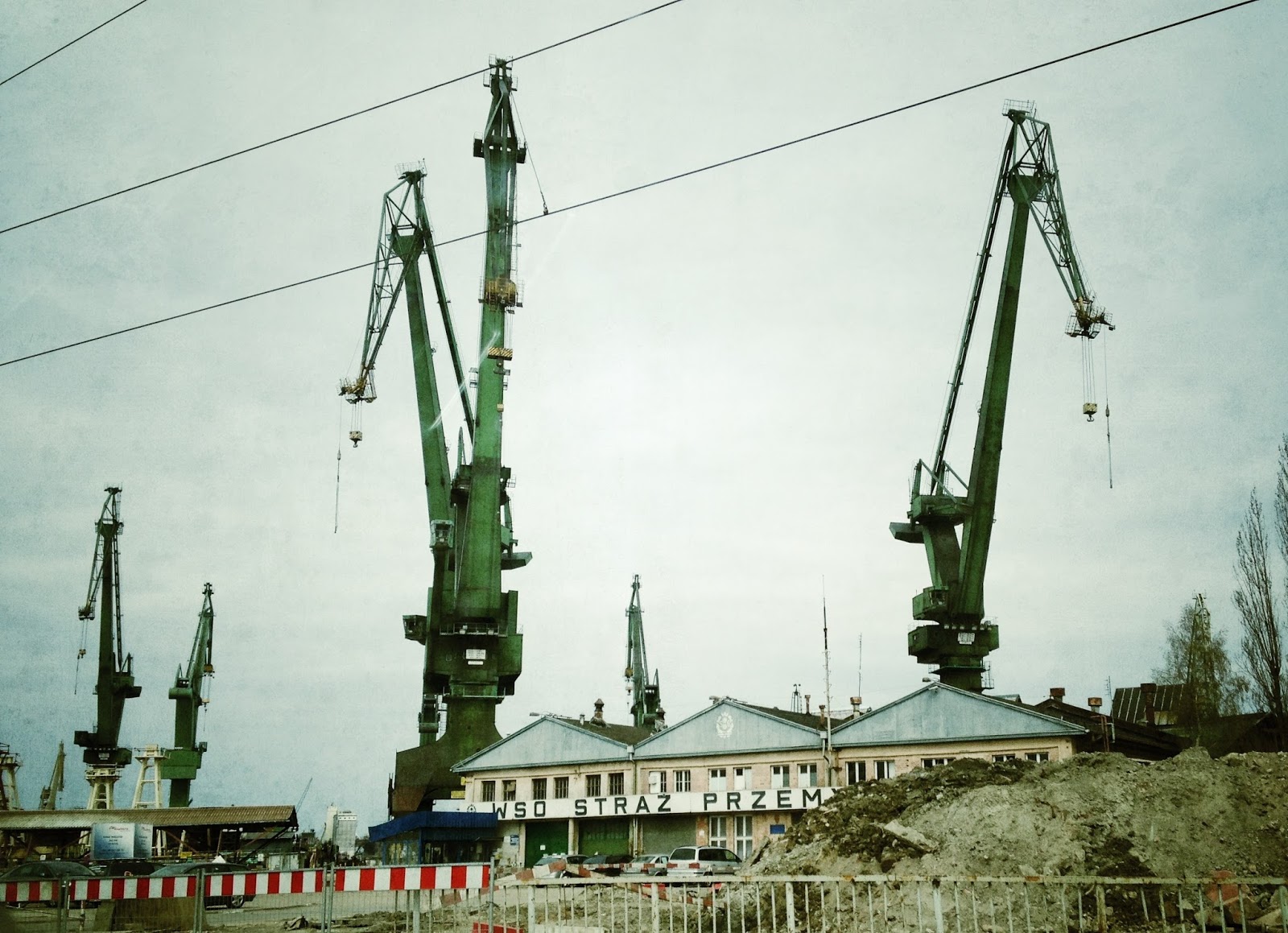
Gdańsk and the Shipyard

          Beginnings of shipbuilding in Gdańsk date back to the 70s XV. In 1804 the shipyard was founded by Jan Klawitter, who built the first wooden sailing ships and river steamers. Then, in 1844 on the grounds purchased by the Prussian government established Navy marina, then transformed into the Royal Plant Construction of Corvettes. Since 1871 the plant was named Kaiserliche Werft (Imperial Shipyard). The yard was owned by the state and worked exclusively for the needs of the Navy. In 1890 near the Imperial Shipyard was established shipyard Schichau-Werft, produced both commercial vessels and passenger.

           After the outbreak of war, the whole shipyard was taken over by the German state. After the war, September 3, 1945 inaugurated the opening of ship repair yard. Additional production was assembling tractors, steam engines and trucks. November 6, 1948 took place the launching of the first built after the war, ship named Sołdek. The ship was named after the tracer working of the Gdansk Shipyard, Stanislaw Sołdek.

          April 15, 1967 Gdansk Shipyard was named after Vladimir Lenin. December 14, 1970 was announced in Poland price increase of meat and other food products. This resulted in the outbreak of a strike in the Gdansk shipyard and other shipyards around the coast. Against the striking shipyard workers used the armed forces, which in acute weapons attacked the striking workers in Gdansk (16 December), as well as workers going  to work in the shipyard in Gdynia (December 17). The bullets that killed dozens of people.

             August 1980 was another great event in Poland and the Gdansk Shipyard. The huge economic and social problems, such as difficulties in the supply of basic foodstuffs at an all-time food exports to the Soviet Union, the authorities struggle with growing increasingly democratic opposition, restrictions on freedom of speech, lack of prospects for improving living conditions. Launched August 14, 1980 sit-crew Gdansk Shipyard in defense of the fire leader of the labor movement: gantry Anna Walentynowicz. The strike turned into three days of nationwide protest society against the communist regime. Shpiyard staff protest was supported by intellectuals and society and transformed then in a nationwide social movement "Solidarity". Labor strikes covered the entire country.

              Increasing in the end of 1981 years the tension in relations "Solidarity" - the state authorities reached its apogee on Sunday, 13 December, when the First Secretary of the Central Committee of the Communist Party and the Prime Minister, General Wojciech Jaruzelski declared martial law. Banned "Solidarity" and imprisoned or interned active social activists, introduced censorship of the press and publications, radio and television. Introduced curfew introduced wiretapping of telephone conversations and censor mail, limited mobility, introduced food stamps.

               At the end of the 80s rose again the activity of society, demanding the legalization of "Solidarity" and return to the path of democratic change. Further demonstrations took place with the participation of workers and Lech Walesa, Nobel Peace Prize laureate of 1982. The communist authorities recognizing the need for change agreed to talks with the opposition at the "round table", which led to partially free elections to the parliament and the Senate in 1989, and changes political system in Poland.

               Gdansk Shipyard during their activities has built and put into operation shipowners concerned from various countries of the world more than 1,000 fully equipped seagoing vessels with a high international standard


Photos by mag jack